The original avatar movie, “Avatar” came out in 2009 and was a hit at the box office. Two sequels were greenlit immediately after, but soon two more were granted to Director James Cameron, totaling a five movie series. “Avatar” was groundbreaking for its visual effects and immersive story of a paralytic ex-marine who takes his late brother’s place by venturing into the alien world of Pandora.
Many yearned for a second movie, but it wasn’t until 2022 when “Avatar: Way of Water” released in theaters. Director Cameron refused to work on “Way of Water” until he finished all the sequels’ scripts for continuity and to prevent plot-holes. “Way of Water” follows Jake Sully—played by Sam Worthington—assimilating with the Na’vi and escaping antagonist, Miles Quaritch—played by Stephen Lang.
Both movies left viewers craving more, and much to their delight, “Avatar: Fire and Ash” came three years later on December 19, 2025. I and many others had high expectations for this film due to the successes of the other movies. Especially as we expected to meet a new Na’vi tribe, the Ash people. Spoiler warning, as there are many pivotal moments I explore.
I personally like when movies imply and use unreliable narrators, as it gives viewers things to discuss and analyze. I have to visually pay attention and see the little details in order to understand the full picture. With “Fire and Ash,” Lo’ak—played by Britain Dalton—is the narrator. He’s a teen who doesn’t understand the world and is isolated emotionally from his peers due to his mixed heritage from his father, Jake. Still, the movie moves away from Lo’ak’s perspective to explain more of the world. It’s an equal balance.
The movie opened up with Lo’ak. It expands on the grief that affected the Sully family following the death of their oldest son. Lo’ak explains his mother grieves the traditional Na’vi way while Jake does “his way.” It made me realize how disconnected Lo’ak was from his human heritage. It’s never said explicitly, but there are moments like this where Lo’ak knows there’s a difference between his mother’s culture and his father’s.
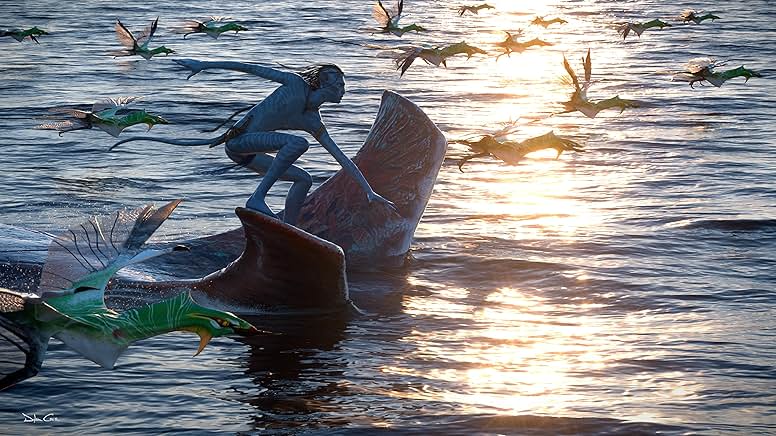
The computer-generated imagery(CGI) may be the best I’ve seen. It’s realistic but not too much that it breaks the immersion. There are many fine details—I noticed light reflecting off the water splashes, creating rainbows. It’s something that only appears for a second, yet I immediately was drawn to it. Again, they included water running down the body of the sea creatures. Each drop added light reflection as if these animals were real.
I loved how the movie tackled Neytiri’s—played by Zoe Saldaña—hatred for humans. Her rage appeared within previous movies, however it was never delved into deeply. Here, there is a conversation between Jake and Neytiri in which she explains she hates their “pink hands and the insanity in their minds.” Jake pauses and states he is still human inside even if he now has an avatar body. He then asks, “Do you hate me…do you hate your children?” The acting was phenomenal, Saldaña and Worthington gave each line with passion and the emotion brought me to tears.
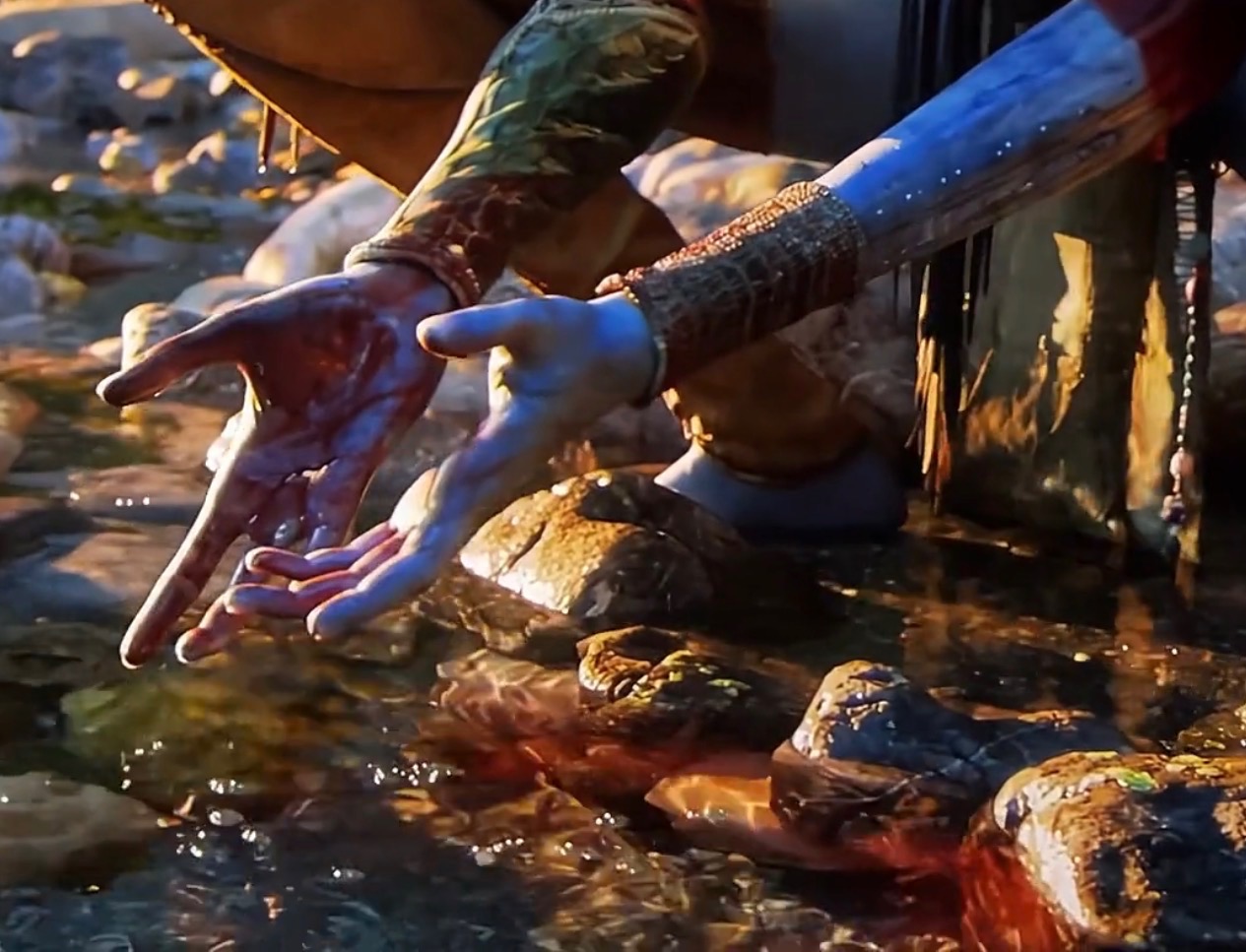
Following this conversation came one of my favorite scenes in which Neytiri and Jake are speaking about what to do with Spider—played by Jack Champion—a human born on Pandora. Jake ultimately believes it’s better to kill him to save Pandora. Neytiri hesitates but doesn’t stop him. Once she’s washing the red paint off her hands does she realize her mistake.
I understood this scene as though the red paint represented the blood that stains her hands if she allows Spider’s death. It’s the climax of Neytiri’s development, and it’s a scene that evoked emotions in me—I was nearly in tears. Neytiri washing her hands in the river from “Avatar: Fire and Ash”
As much as I loved “Fire and Ash,” it doesn’t come without flaws. The plotline was predictable. I found that each movie contained the same plot:The antagonists harm the heroes, everyone rallies together, the heroes almost lose until the last moment when they win. It was fine in the other movies, but now that it’s been repeated for a third time. It’s not that the story direction was bad—I expected something different by now.
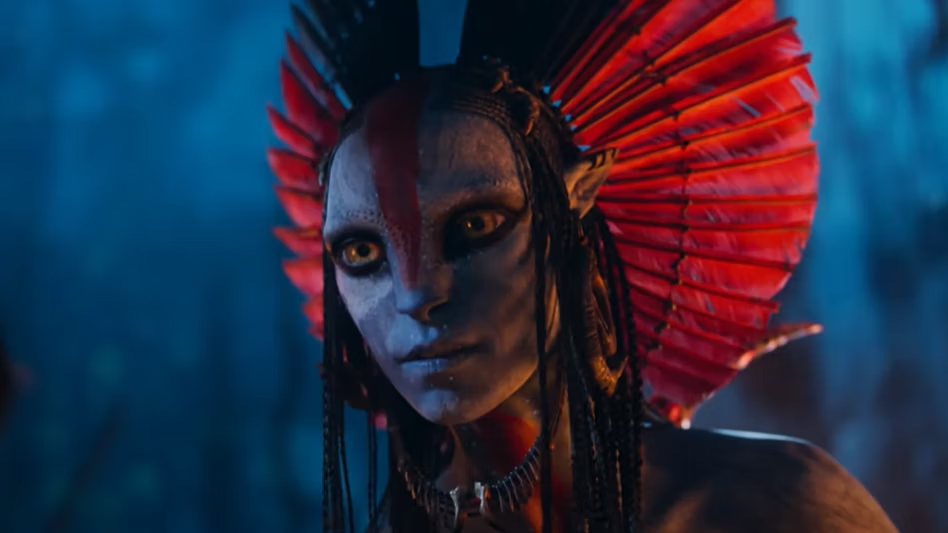
Furthermore, I had assumed the new character, Varang—played by Oona Chaplin—to be a larger part of the story. She was in every trailer and promotional material, yet she only held a tiny portion of the film. She was a very interesting character, a foil and parallel to Neytiri. However, I feel as if it was more an error of the marketing team rather than the film team, as “Fire and Ash” was marketed with Varang as the focus. Had she not been pushed to the forefront, this wouldn’t have been a problem.
Additionally, a big part of Jake’s character arc was his guilt at being the leader in a war that killed many Na’vi. I would’ve appreciated seeing this first hand, and there was an opportunity with the death of Ronal and Roxto—as they’re side characters that were important to the plot—to show grief similar to the grief in Neteyam’s death. I felt as if their deaths were wasted when there could’ve been more done with it.
Although I described many flaws, during my first watch, these weaknesses weren’t peculiarly noticeable. The movie’s overall performance made up for those grievances I have—and they could be made up in the next “Avatar” movie that follows. Therefore, these reasons are why I give “Avatar Fire and Ash” a 10/10. It provides a compelling story, multiple character development throughout the movie, and extraordinary visuals that capture my eye.