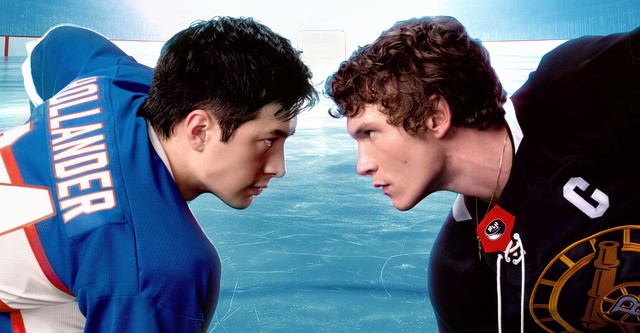
Since November 2025, viewers have been rooting for “Heated Rivalry,” a queer sports romance show about two rival hockey players falling in love.
“Heated Rivalry” follows Shane Hollander (Hudson Williams) and Ilya Rozanov (Connor Storrie), two young hockey stars who play for the rival Montreal Metros and Boston Raiders, respectively. In their rookie season, Shane and Ilya enter a covert relationship. Over the next several years, Shane and Ilya must keep their secret — and budding feelings — in check.
“Heated Rivalry” has seen massive success since its release. The show averaged 10.6 million viewers per episode (Saturday Night Live had only 4.82 million viewers on January 31, 2026). Viewership tripled from the premiere to the finale and has more than doubled since the first season’s finale premiered.
So, why is “Heated Rivalry” resonating somuch with audiences?
Joyful queer and neurodivergent representation has drawn in many viewers.
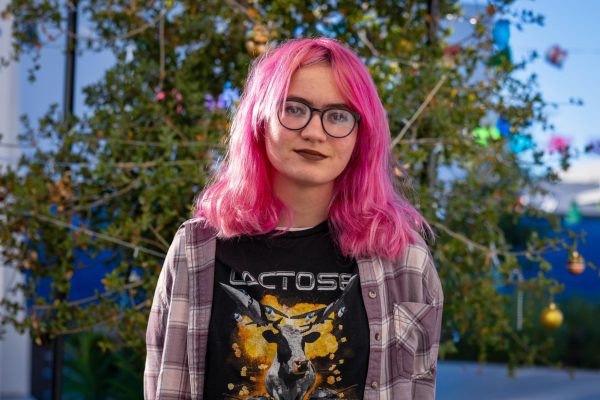
SAS sophomore Hazel Carpenter th
ought that queer joy was central to the show’s success. “I think a lot of the queer media that we’re seeing focuses on the struggles [of oppression], but with ‘Heated Rivalry’ and ‘Heartstopper’ [another queer romance show], we get to see how they get to overcome them instead of being forced to hide pain and that kind of stuff.” “Heated Rivalry” has become popular in part because it offers the lightheartedness that queer teens are so often deprived of.
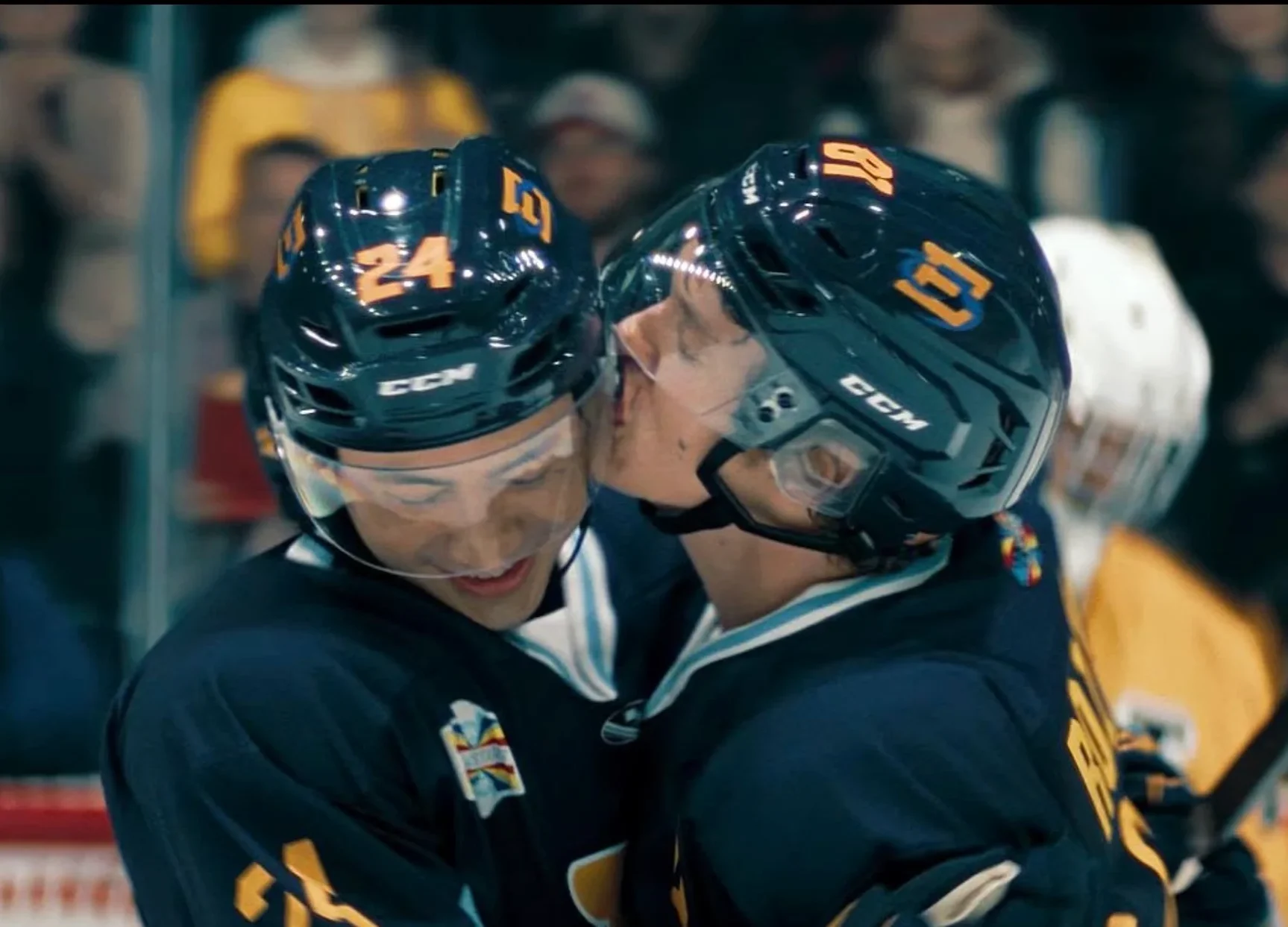
Still, according to Carpenter, the prevalence of struggle among young queer people has actually made some less fond of “Heated Rivalry.”
“I have a lot of friends, who are also queer, who dislike ‘Heartstopper’ and ‘Heated Rivalry’ because they don’t think it’s realistic,” Carpenter said. As queer people face increased risks in an increasingly conservative culture — the Supreme Court, for instance, just blocked a series of California laws designed to protect transgender students from being outed — “Heated Rivalry” can feel like irrelevant escapism.
Still, Carpenter wants to normalize joyful queer stories that don’t center discrimination,
saying, “I wish that the relationships, like between Shane and Ilya, weren’t seen as unrealistic, like them being able to be together. I wish that we were in a world where we could get to be seen as normal.” Though Shane and Ilya are closeted throughout season one, hockey — not homophobia — is the central tension in their relationship and its secrecy.
By not dwelling on discrimination, this representation offered could be healing for real life queer athletes. Many queer people feel out of place in athletic environments because sports, especially sports divided by gender, are often charged with binary gender ideas that clash with the more fluid gender norms within the queer community.
After experiencing homophobia, Carpenter, who used to play soccer, drifted away from sports. “I would have people go up to me in the dressing room and be like, ‘Are you watching me change?’” Carpenter recounted. “Because … the rumor was spread, and it’s like, ‘blah, blah, blah is gay.’ I had that moment, and it made me hate sports cause I didn’t want to have to go into the PE locker room.” Carpenter was far from alone in their discomfort.
Discrimination isn’t rare for queer people in sports. The UK human rights group Stonewall reports that 27% of LGBTQIA+ people don’t feel welcome in community sports teams, and around 22% of LGBTQIA+ experience discrimination at a gym or sports group each year.
Rowan Wheaton, an HGM junior who is currently a captain of NHHS’s fencing team, shared Carpenter’s experiences of feeling uncomfortable in athletic spaces. They recalled how even before they were out to their old fencing studio, they felt self-conscious in such a heternormative and male-dominated athletic environment: “You feel so out of place and uncomfortable and everybody constantly has that little [thought of] ‘What if this person’s thinking about me?’ … And that’s such a visceral fear, and it really, really screws with your ability to do your sport in the way that you’re supposed to.”
Shows like “Heated Rivalry” that portray queer athletes’ experiences joyfully can be healing for viewers. Carpenter said that after watching “Heartstopper,” a queer romance show involving rugby, that “it was so nice with Heartstopper to have the relationship between sports and queer media, [so that] you can find your place.” After watching “Heated Rivalry” and videos of its actors’ workout routines, Carpenter also said that he and his mother have been inspired to exercise more.
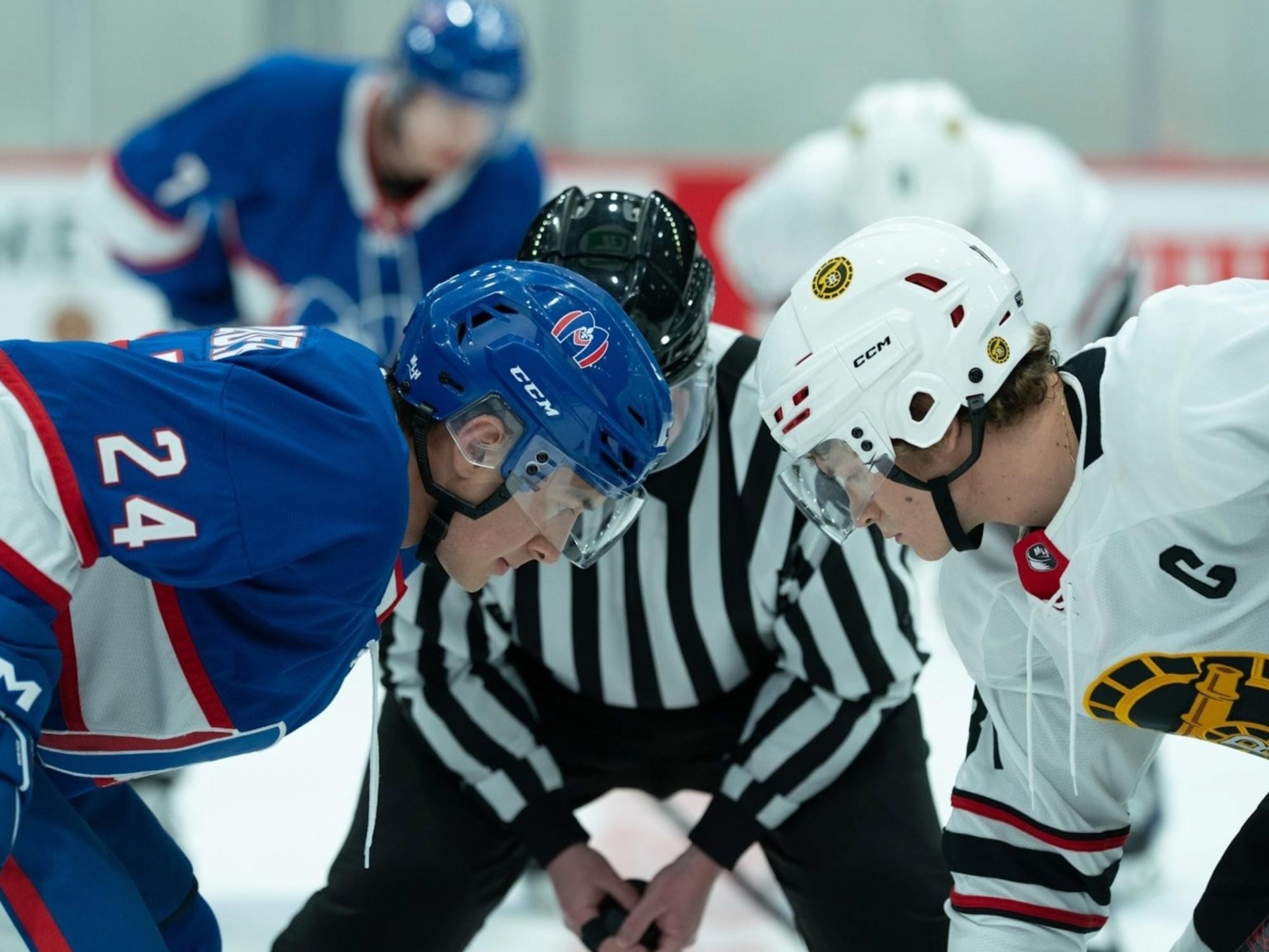
On top of its queer representation, “Heated Rivalry” also features a canonically autistic character in Shane Hollander.
Shane is one of few realistically depicted neurodivergent characters. According to this study from the Disability Studies Quarterly, most autistic characters on television are straight white men who are savants with superhuman abilities. By contrast, “Heated Rivalry”’s portrayal felt authentic to viewers, and many tuned in for representation.
Though Shane’s neurodivergence wasn’t directly addressed in the show — it was instead confirmed by Rachel Reid, author of the “Game Changers” book series that inspired “Heated Rivalry” via Reddit — Shane’s autism was shown through the character’s behavior, the idiosyncrasies of which Hudson Williams pulled from own father’s neurodivergence. This helped Williams’s portrayal feel more honest and nonjudgemental.
In particular, many enjoyed how Shane’s autism was normalized and accepted. “It’s nice to have a neurodivergent character in a piece of media where his biggest problem isn’t people being unkind to him,” Carpenter said. After watching the show with his mother, Carpenter even had a “pretty good” conversation with his mother that may not have otherwise occurred.
While some viewers were relieved to have a character whose neurodivergence was tangential to his storyline, others were disappointed that Shane’s autism was not discussed in more detail.
“[The creators] kind of retcon it,” Wheaton said. “They say officially that Shane is autistic, I get that, but they never say it in the show.” Wheaton suggested that confirming Shane’s autism on-screen — maybe even including scenes in which Shane discusses it with Ilya — could improve the show’s portrayal of neurodivergence.
“Heated Rivalry” has opened doors for more queer shows to gain mainstream viewership, revealing the draw and impact of accurate, joyful representation. As the show continues into its second and third seasons, it has the incredible power to help so many viewers “find their place.”