National test scores in the United States have dropped significantly in recent years, particularly in reading and math. This decline has raised concerns about whether students are being prepared for college and life after high school. It has also prompted a broader question: what is happening inside classrooms that test scores alone cannot explain? At North Hollywood High School, students and educators say the answer often lies in stress, motivation, and access to meaningful support.
In 2024, results from the National Assessment of Educational Progress, also known as NAEP or “The Nation’s Report Card,” showed that reading scores declined again for both fourth-grade and eighth-grade students. Long-term data indicate that many scores remain below pre-pandemic levels, with uneven recovery across student groups.
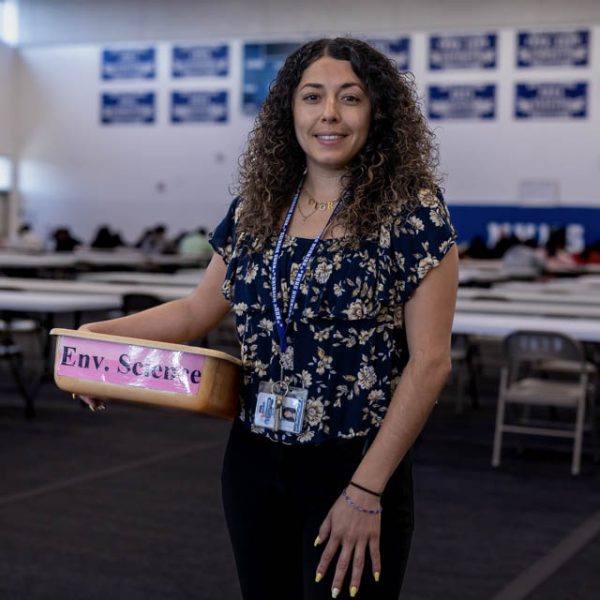
In California, achievement gaps remain pronounced. Asian students consistently outperform other groups, while Black, Hispanic/Latino, and socioeconomically disadvantaged students show lower proficiency rates. At NHHS, the student population is 64.1% Latino, 18.4% White, 11.5% Asian, and 3.1% African American, with 72% of students classified as socioeconomically disadvantaged.
Other national assessments reflect similar trends. According to the National Center for Education Statistics, the average SAT score declined from 1028 for the Class of 2023 to 1024 for the Class of 2024. ACT reported that the Class of 2024 earned an average composite score of 19.4, continuing a downward pattern. While these numbers do not define individual students, they mirror experiences that students and staff at NHHS see daily.
De Dinovi, a 12th grader in the Zoo Magnet program, says, “I feel like school hasn’t changed too much relative to the difficulty. It’s more the people around me that have changed.” He points to staffing turnover as a major disruption, particularly in English, noting that the loss of two widely respected teachers affected student morale and classroom experience.
Math teachers say academic gaps often begin long before high school. Ms. De La Cruz, who has taught Algebra 1 through AP Calculus over the past five years, remarks, “The skill levels aren’t too different, but the retention and attention span are.” She then explains that many students struggle with foundational skills such as multiplication and division, even in advanced math courses. Without strong foundations, students face increasing difficulty as calculators are removed and expectations rise.
For many students, academic challenges are intensified by exhaustion. Rowan Wheaton, an 11th grader in the Highly Gifted Magnet, describes the school year as, “weekly burn-out.” “I start out super energized,” Wheaton says, “and by the end of the week, I really only have energy for the gym.” While school has not necessarily become harder for her, competing responsibilities have made it challenging to sustain her own focus and energy.
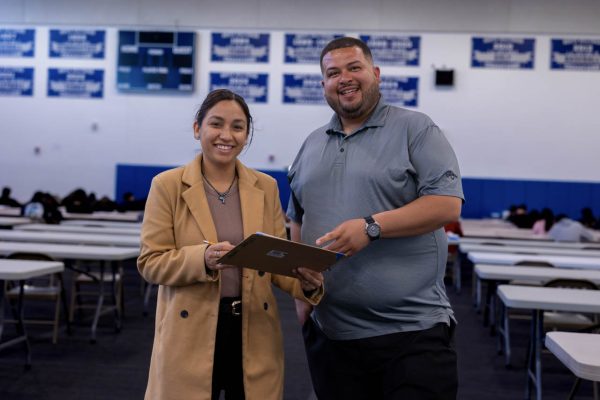
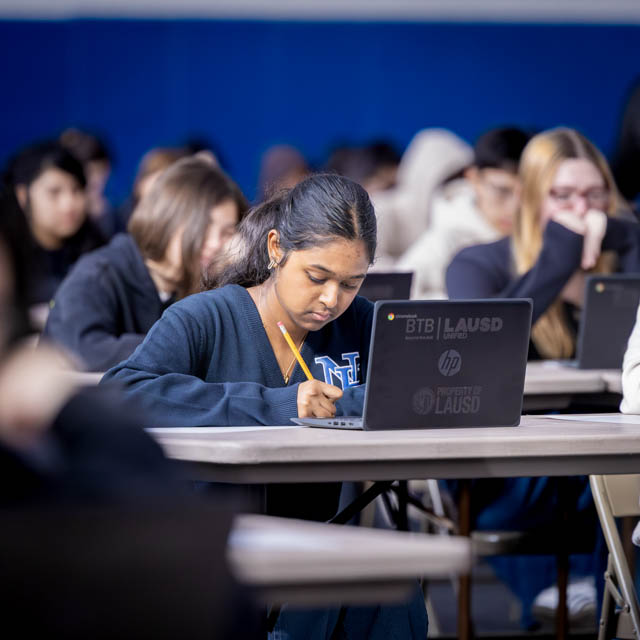
Teachers say burnout and attention struggles are especially visible in reading. Ms. Gharabegi, an English teacher at Zoo Magnet, says technology and shifting student habits have reshaped classrooms. “Now, AP exams are all digital,” she comments, calling it a major shift. “I am seeing a drop in many skills,” Gharabegi says, “especially stamina when it comes to reading.”
She explains that difficulty sustaining focus affects more than English class. When students struggle with longer texts, it becomes harder to follow themes, build analysis, and engage deeply with ideas, skills that carry into writing and critical thinking across all subjects and life itself. Gharabegi emphasizes that her goal is not to teach to a test, but to build lasting comprehension.
“Personally, I think that students should partake in novel study,” she says, explaining that longer texts help students develop endurance, recognize patterns, and form ideas grounded in evidence. However, she notes that the structure of standardized testing often pushes instruction toward shorter passages and quick responses, which can interfere with deeper learning.
Standardized testing remains central to education debates as scores decline nationwide. Dinovi says tests fail to capture the full range of student ability. “I absolutely don’t think that they can accurately represent every student,” he says. Wheaton agrees, “They test test-taking skills,” she says, rather than a genuine understanding of the subjects.
De La Cruz sees the pressure of testing most clearly in advanced math classes, where students are expected to balance rigorous coursework with extracurricular(s) and jobs. She describes that curriculum pacing often moves too quickly, leaving little time for mastery in foundational courses such as Algebra 1 and Algebra 2. When students advance without fully understanding core concepts, she explains, those gaps follow them into higher-level classes and increase long-term stress.
Ms. Hyun, the school’s problem-solving data coordinator, oversees standardized testing and district assessments. She says students today are balancing more demands than ever, especially as technology has become central to learning. The pandemic, she explains, accelerated these changes. Assessments such as i-Ready are used as diagnostic tools to track progress and identify where support is needed. While Hyun says standardized tests provide consistent comparisons across classes and groups, she acknowledges that they do not reflect every student’s strengths. “There are students who are very gifted,” she says, noting that test performance does not always tell the full story.
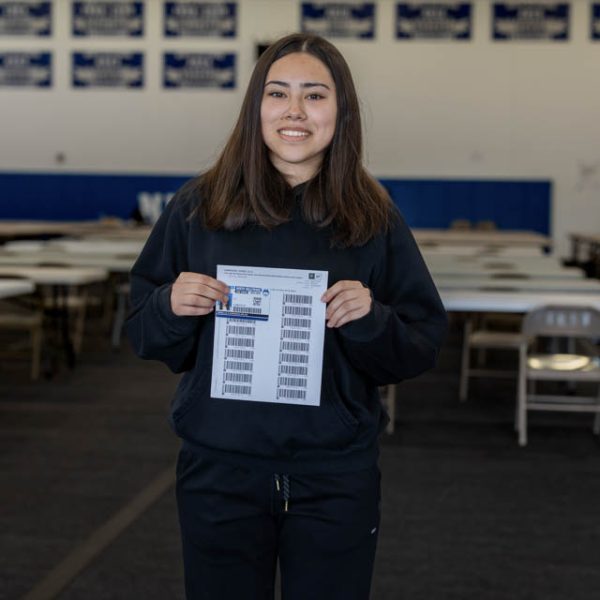
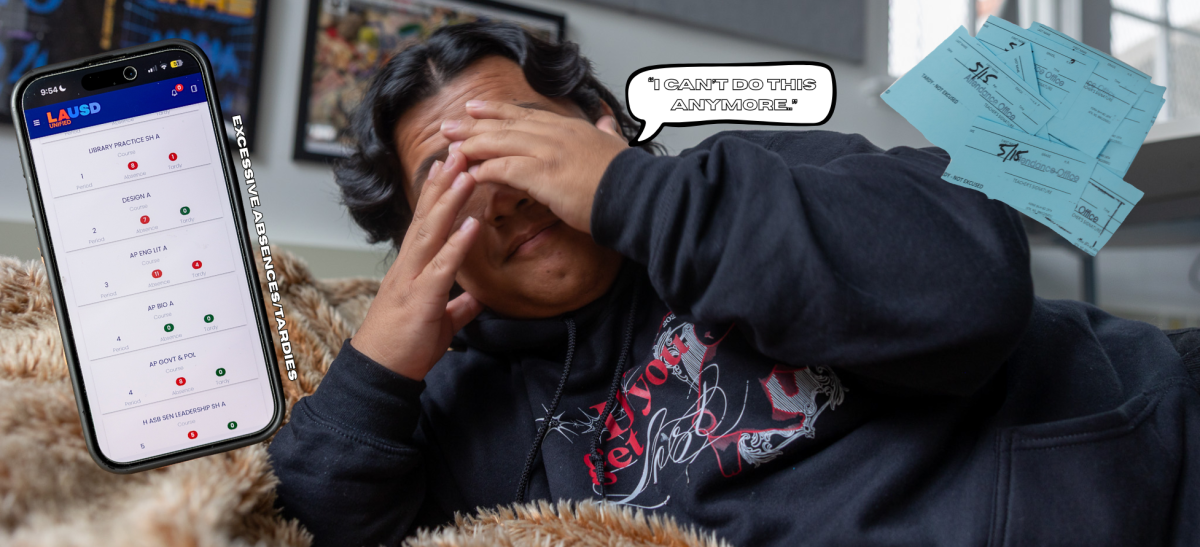
Ms. Narine, the school’s A-G diploma counselor, works closely with students who are behind on credits. From her perspective, attendance is one of the largest barriers to learning. Students who feel unprepared often avoid class altogether, she explains, making it harder to rebuild motivation later. Narine also points to mental health as a major factor affecting focus, engagement, and persistence.
Educators agree that support is most effective when it happens early and consistently. Gharabegi notes that many students hesitate to ask for help, while De La Cruz emphasizes the value of one-on-one support in rebuilding confidence. However, limited time and staffing make individualized attention difficult. Gharabegi argues that schools must move away from advancing students without mastery. “Stop pushing students through the system just to push them through,” she says, warning that unresolved gaps can lead to burnout and disengagement as expectations increase.
Despite these challenges, educators remain hopeful. De La Cruz says moments when students gain confidence and ask questions remind her why she teaches. Gharabegi adds that student resilience gives her optimism. With stronger support systems, earlier intervention, and a focus on mastery over speed, educators believe students can begin to recover from the setbacks reflected in national data.
National test scores show that students across the country are struggling in reading and math. At NHHS, students and educators say the decline is tied to more than academics alone. Attendance, motivation, mental health, exhaustion, and test pressure all shape whether students can learn, persist, and feel prepared for what comes next.