
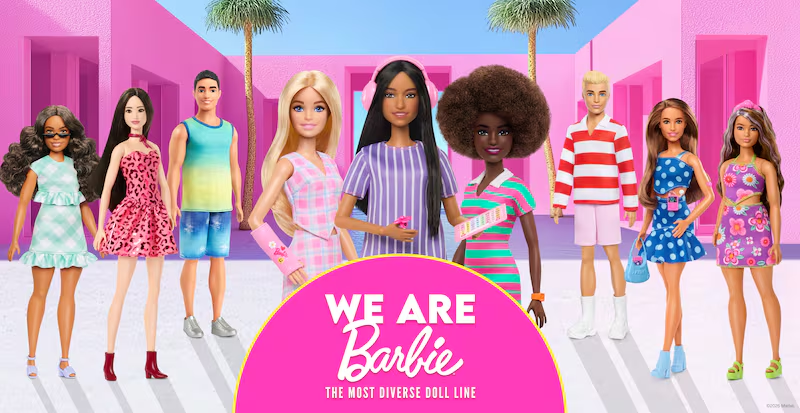
For decades, Barbie has been one of the most recognizable and iconic dolls in the world. First introduced in 1959 by Mattel, the brand has aimed to promote an empowering image of femininity by showing girls around the world they can take on a wide range of roles and careers.
In recent years, Barbie’s expansion into disability representation has sparked both praise and criticism. Beginning around 2019, Mattel introduced dolls with visible disabilities including wheelchairs, prosthetic limbs, hearing aids, vitiligo and Down syndrome. While many families children celebrated these additions as a step toward inclusion, others questioned whether the presentation was thoughtful or simply performative.
One major criticism against these dolls is that they can feel oversimplified or inaccurate. For example, earlier versions of a Barbie in a wheelchair faced backlash as the chair could not properly fit inside the Barbie Dreamhouse, raising concerns about how poorly thought out the design was. This led to later adjustments, including wider doorways and modified layouts in newer Dreamhouse designs.
Another issue raised by critics is that despite adding visible differences, the dolls still maintain unrealistic body standards. Most remain slim and symmetrical, and conventionally attractive which can undermine the goal of authentic representation. Critics argue that true inclusivity should go beyond a single distinguishing feature and reflect a wider range of body types.
There are also concerns about the meaningfulness of the doll. Some believe Mattel is capitalizing on social movements rather than engaging in meaningful representation. This reflects a broader call for deeper collaboration with disabled communities, more accurate design choices and richer storytelling behind the dolls.
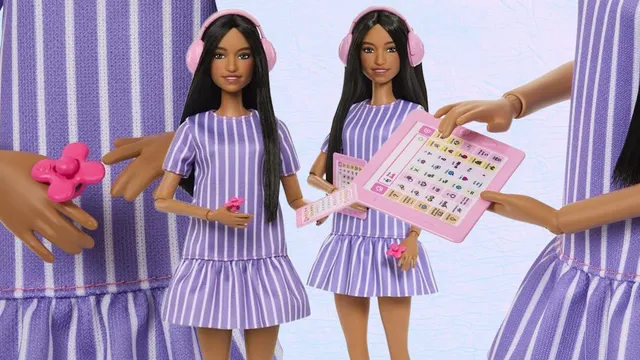
A more recent controversy involves the release of a Barbie intended to represent non-verbal autism, which included a tablet as a communication tool. While assistive devices are used by some nonverbal individuals, critics argued that this portrayed the risk reinforcing a narrow stereotype.
Public reaction overall has been mixed, as many parents appreciate the representation as their children can see themselves reflected on toys for the first time. At the same time, advocates and critics continue to push for more accuracy, consultation and depth in representation.
Interestingly, comparisons are made to American Girl Dolls, another doll brand that has received praise for its approach to diversity. American dolls are often accompanied by detailed backstories, historical context and personality development which critics argue creates a more respectful and meaningful respectful form of presentation.
While Mattel has made notable progress, the debate surrounding these dolls shows that inclusion doesn’t need to be just about visibility, it’s about accuracy, intention and impact. As society continues to push for more representation, and while Mattel tries to manage this new era of progress and representation, it’s a reminder that work is still needed to be done to have real and total representation for people all over the world.