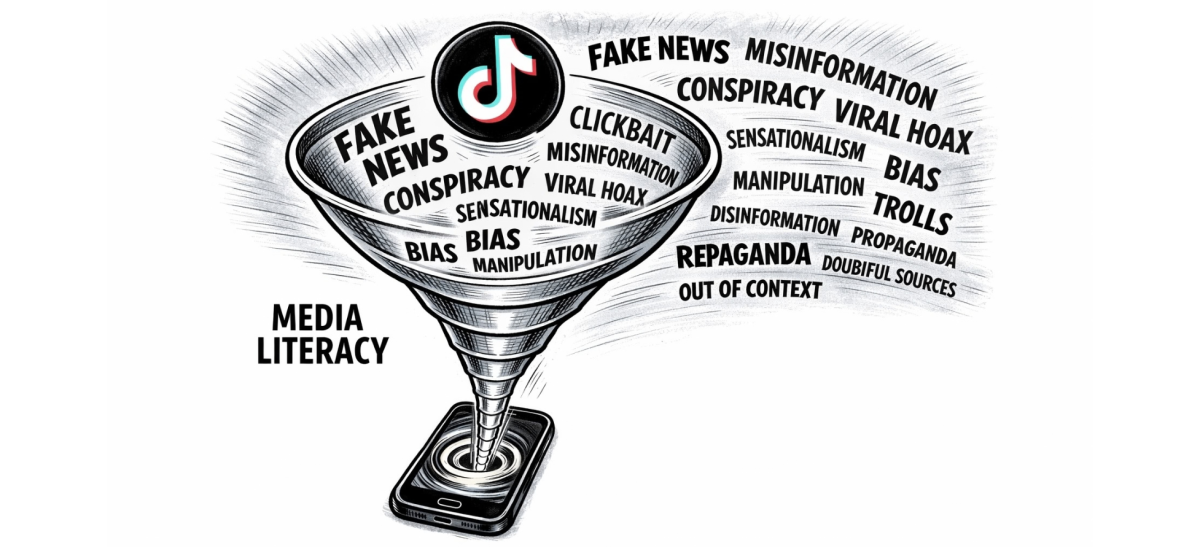
In the past, daily news came to the United States through newspapers on the front porch or evening broadcasts on television. Today, especially for younger generations, news often arrives in seconds through a tap, swipe, or scroll—most commonly on social media platforms like TikTok.
On TikTok, many creators take large, complex news stories and compress them into videos that last only fifteen or twenty seconds. Because the platform rewards views, likes, and shares, creators often simplify events or highlight the most dramatic parts of a story to attract attention.
For example, when major political events such as Supreme Court rulings or elections occur, some TikTok creators summarize the entire situation in a quick clip that may leave out key background details or opposing perspectives. While these videos can make news easier to access, they can also remove important context, which may lead viewers to misunderstand complicated issues.
This shift has rewritten how people get information, why media literacy is essential, and why knowing whether a source is trustworthy matters more than ever.
So what is media literacy?
Media literacy is the ability to access, analyze, evaluate, and create media content in all its forms. It’s more than just reading or watching, it’s understanding how and why information is presented, recognizing bias, and being able to distinguish reliable facts from misinformation or opinion. Media literacy helps us think critically about the content we consume rather than accepting it as face value.
Media literacy also includes recognizing how media shapes what we think and feel and developing the skills to engage with media responsible and ethically. In other words, it’s a kind of literacy that helps people be informed citizens and participants in a democratic society.
So how can you tell if a source is reliable?
Not all information is created equal. To determine if a source is trusted, media literacy encourages several key practices: investigating the source, checking for evidence, looking for error or bias, and cross checking.
Media literacy isn’t about mistrusting everything, it’s about asking questions and verifying claims rather than assuming all online media is true. As social media continues to dominate the way Americans receive information, these skills become even more important. One platform in particular shows why.
Tiktok started as a platform built around short, entertaining videos and trends. But over time, it’s become a place where many Americans encounter news and at times even without realizing it. According to Pew Research Center, studies show that roughly 17% of U.S. adults say they regularly get news on TikTok, and among the platform’s users, about 52% report seeing news-related content.
Importantly, many of these news encounters don’t come directly from professional journalists or established news outlets. Users often see news from a mix of influencers, celebrities, or even strangers.
This shift carries major implications. Unlike traditional new organizations, TikTok is not structured around journalistic standards such as fact-checking, editorial review, or clear sourcing. Its primary goal is engagement, not necessarily accuracy. Short videos and algorithmic recommendations can blur the line between facts, opinions, entertainment, and gossip.
A creator may summarize a complex political issue in under sixty seconds, leaving out historical context or key details. Because the information is delivered confidently and quickly, users may assume what they see is accurate, even if it is simplified, opinion-based, or missing important context.
The platform’s algorithm shows users content tailored to their interests, which can create “echo chambers,” environments where people see mostly information that aligns with what they already believe. When news is filtered this way, it can reinforce beliefs but also increase the speed of misinformation.
Additionally, concerns about content moderation and censorship have added another layer of complexity. Some users believe that certain political topics are limited, suppressed, or filtered by algorithms. At the same time, others argue that moderation is necessary to prevent harmful misinformation.
This tension highlights why relying on a single platform for news can be risky, especially when algorithms, not editors, determine what information is most visible. For some Americans, particularly younger users, TikTok may be their primary or only exposure to current events, making media literacy even more essential.
With digital platforms dominating how Americans encounter information, kids and adults alike need critical thinking skills. Media literacy teaches people to ask questions like: Where did this information come from? Who created it and why? Is there evidence supporting it? Do other reliable sources corroborate it?
Without those skills, misinformation spreads faster than facts, especially when images, headlines, or short clips are designated to grab attention quickly. Media literacy helps slow down that process so that people can evaluate news before sharing or believing it.
In an era where a social media app once known for dance trends now shapes public perception of world events, media literacy is no longer optional but necessary. Understanding who is informing the narrative, questioning the reliability of sources, and using critical thinking are key steps toward becoming informed and thoughtful news consumers in the digital age.
Recognizing this need, even schools are beginning to respond. The Los Angeles Unified School District has explored expanding media and news literacy education so students can better analyze online information before graduating. Efforts like this reflect a growing understanding that as social media becomes a primary source of information, students must also learn how to question, verify, and responsibly engage with the media they encounter.